Between 1992 and 1995, Fernández studied Graphic Design in Venezuela, later working in advertising while exhibiting his first paintings. In 2003, he moved to Spain to deepen his study of the Psychology of Color—a foundation that would evolve into his lifelong theory, Living in Colors, exploring the emotional and existential power of chromatic language. After returning to Venezuela, his practice expanded in intensity and depth until 2015, when political upheaval forced him into exile. Leaving behind his family and artistic roots, he fled to Miami, where Art Center Miami represented him in exhibitions and international fairs until 2020.
The pandemic marked another turning point. In 2020, Fernández relocated to New York City with his dog, Gala, beginning a new chapter defined by introspection, reinvention, and endurance. The years that followed brought profound personal loss—his father, aunt, and brother passed away in 2022, and his beloved Gala Dali in 2023— deepened his connection to themes of memory, lostness, and the fragility of time.
In 2023, Fernández earned his first New York City residency with Art on the Ave NYC, further expanding his voice within the contemporary landscape. Today, his work stands as both confession and confrontation: a living dialogue between pain and beauty, exile and belonging, silence and color.
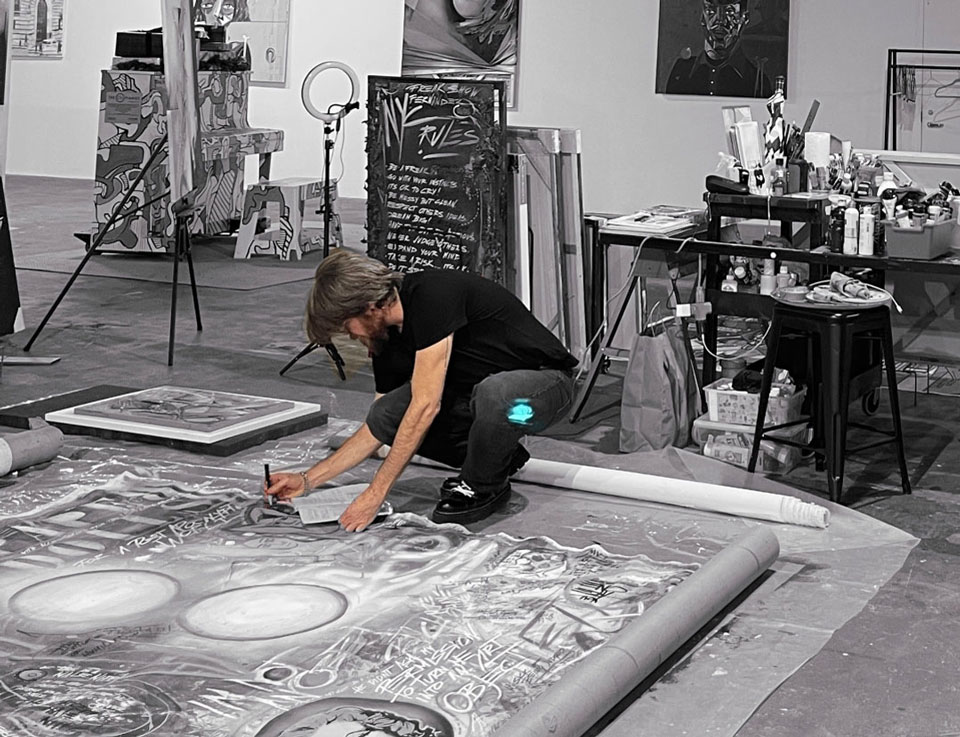
Across more than twenty-six years, Fernández has developed a visual language grounded in color, texture, and emotional energy. Often associated with abstract expressionism, his work transcends categorization, merging personal narrative with broader reflections on identity, exile, and the politics of existence. His ongoing project, ARTMAGEDDON, confronts global crises—discrimination, migration, and war—through large-scale canvases, a composition book, sculpture, and video, transforming chaos into a mirror of resilience.
As Fernández often says, “I am the artwork that never ends.” His practice embodies this perpetual evolution—where art is not simply made, but lived, as an act of resistance, tenderness, and transformation.